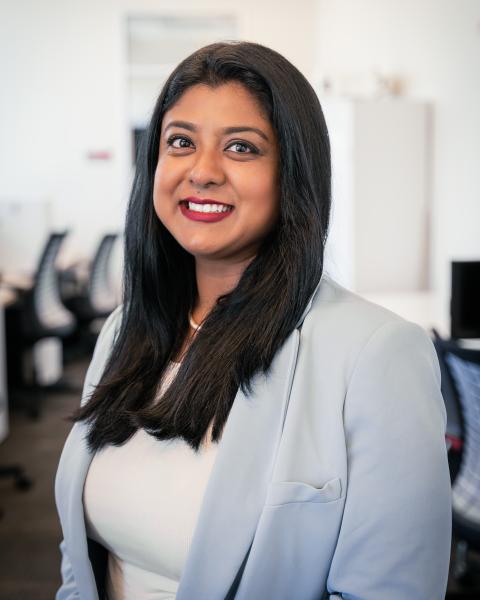
Intern Perspectives: Paroma Arefin, AMCP Foundation/Genentech Internship
The phone rings at a specialty pharmacy. A pharmacist is calling a patient with advanced lung cancer because her refill is late. The patient admits she has been skipping doses to make her pills last. The copay is too high. The pharmacist connects her to financial assistance, and her next shipment arrives on time. One call kept her on therapy. But what about the patients whose barriers are harder to see? That question shaped my AMCP Foundation Health Disparity Research Internship.
Here is a truth most people miss: patients rarely stop a cancer drug because they stopped caring. They stop because life gets in the way. A bill. A form in the wrong language. A refill that slips through the cracks. Oral targeted therapies have transformed care for advanced non-small cell lung cancer (NSCLC), but a breakthrough only counts if it reaches everyone.
I kept returning to one thought. We often treat adherence as a patient's choice. But how much of it is really about access? Specialty pharmacy felt like the right place to look. Most of these drugs reach patients there, and so does real support: counseling, refill outreach, and financial assistance. If gaps remain even with that support, we learn where patients need more. If support narrows them, we learn what works.
At Optum Specialty Pharmacy, with support from Genentech, I studied whether race and ethnicity, language, insurance, and neighborhood were linked to how well patients took their therapy and how long they stayed on it. I asked "why?" and "why not?" at every step, and my team welcomed every question.
Why does this matter? Averages can hide the patients who struggle most. Looking closely at disparities shows pharmacies, payers, and manufacturers where to aim support. This internship made that work possible by placing me inside a real organization, with real data, on a question that matters to patients. I would present this work as a poster at AMCP Nexus 2026.
I had the opportunity to work with a large group of experts, and I owe this experience to every one of them. My preceptor, Dr. Kelly Mathews at Optum, helped me understand the specialty pharmacy data, guided the study from design to interpretation, and taught me to read every result in light of the support patients receive. Dr. Charita Marthone, Dr. Clarisse Purvis, and Dr. Stephanie LaPointe at Optum shared great insights. Thank you to Dr. Sarika Ogale for her oncology and adherence expertise, Dr. Meg Good for study design guidance, Ebony Clay for strengthening our disparities focus, and my advisor, Dr. Sujit S. Sansgiry, for helping me to shape the research question and design. A special thank you to Anne Fentress and Ebony Clay for coordinating an enriching program, and to Pfizer for its helpful education series.
I leave with sharper skills in real-world evidence (RWE) research and a clear direction: a career in health economics and outcomes research (HEOR) and managed care that helps every patient stay on treatment.
Support managed care research and the cultivation of tomorrow's leaders by making a gift today!